Stephan Lutter
Meet Our Researchers
Stephan Lutter
Stephan Lutter is a researcher at the Institute for Ecological Economics at WU Vienna University of Economics and Business. His research examines how many natural resources – such as raw materials and water – we need to keep our economy running. Lutter’s primary focus is on mining: Copper is a good case in point because it shows how closely global trends such as digitalization and the energy transition are tied to the consumption of raw materials and water – and why this is particularly problematic for the world’s water-scarce regions. After filming “Meet Our Researchers,” we met up with Stephan Lutter to hear more about how he goes about collecting data on water use in mining – and why everyday choices can be an important first step toward sustainable consumption.
How did you come to your research topic, water use and mining?
I originally studied environmental engineering, where water plays a central role – as part of ecosystems that we need to protect, as a basic necessity of human life, and as a risk factor, for example in the context of flood protection. This interdependence between us humans and our environment is one of the fundamental principles of ecological economics. The closer you look at this metabolism of our societies, so to speak, the clearer you see that the use of specific resources and their impacts cannot be viewed in isolation, and that limited analyses on a country-by-country basis do not offer the big-picture view that is needed. This is especially evident in mining: Extracting metal ores requires a great deal of water, and the local impacts can vary widely. While only comparatively small amounts of metal ores are mined in Europe, for example, the continent imports many products made from metals that were mined elsewhere. In other words, water scarcity caused by mining at a site in South America may be closely linked to the European economy and European consumption patterns.
You have collected data on the water use of mines worldwide. How did you go about this task?
We first mapped where copper is mined around the world. Then we combed through thousands of websites and corporate sustainability reports for data on water use. That was some backbreaking work, let me tell you. The problem is that, in some cases, the reported data can be very hard to compare due to quality issues. We now use semi-automated solutions to handle data collection and quality assurance, and we’re also planning to use large language models (LLMs) going forward – which will require careful quality assurance, of course.
Copper is central to renewable power generation and digitalization. Does this mean that when it comes to driving the energy transition while also avoiding water scarcity, we can’t have our cake and eat it too?
That’s exactly what we’re trying to understand better. Our next step will be to analyze where copper will be mined in the future and how water availability will evolve at these locations. We know that in some regions, even today mining is already taking place under conditions of water scarcity. At the same time, every decision creates trade-offs. If we restrict mining in regions where water is scarce and shift our mining activities elsewhere, that may result in other ecological risks, such as deforestation. We shouldn’t forget that global models rely on a lot of assumptions. They don’t produce exact figures for individual locations; rather, they help us to identify trends and hotspots – they tell us where the situation could become critical and where we should focus our attention and take a closer look.
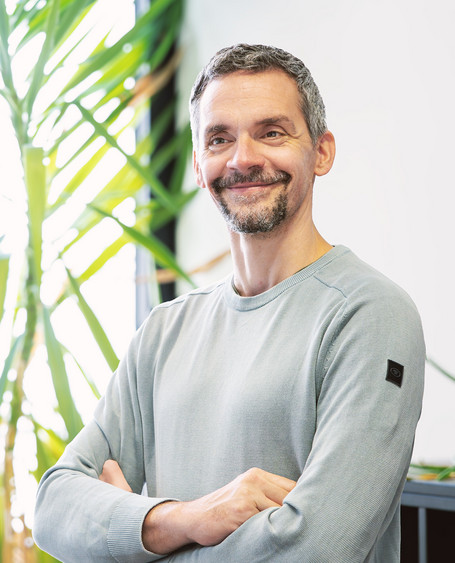
“Water scarcity caused by mining at a site in South America may be closely linked to the European economy and European consumption patterns,“ explains Stephan Lutter
What solutions are available to reduce water consumption in mining?
There are several approaches. Mining technologies vary greatly in how much water they require, but the most water-efficient options aren’t feasible everywhere. Depending on the process, water can be reused or treated, and in some regions desalinated seawater is used. That, however, is a very energy-intensive process. In Chile, for example, seawater is desalinated and pumped up to high-altitude copper mines in the Andes. To reduce the climate impact, desalination increasingly runs on solar power – but then again, we need copper to produce the solar panels in the first place. In the end, this means that the problems are often just shifted elsewhere. In my opinion, it’s clear that we simply have no choice but to reduce our resource consumption overall.
How has your research changed your perspective on your own consumption habits?
I try to be deliberate about what I buy and focus only what I really need. If something breaks – as my climbing shoes did recently – I have it repaired, even if the repair costs almost as much as a new pair. In this way, I set an example – also for my friends and family. For instance, my daughter recently asked me why I had traveled by plane instead of taking the train for a business trip a while ago, and I had to explain my reasons for making this exception to her.
In your work, you deal with global environmental problems on a daily basis. How do you keep an optimistic mindset?
There’s this quote that’s often attributed to Martin Luther: “Even if I knew that the world would end tomorrow, I would still plant an apple tree today.” That pretty much sums it up. I do see things changing for the better, even if it’s only slowly. I also believe that we all have a responsibility to do our part. And if you’re aiming to bring about change, you don’t need the majority on board all the way from the get-go. A minority with a strong can-do spirit can make a significant difference. That’s what motivates me to keep going, working on new solutions, sharing my knowledge with my students, and advancing our understanding together.
The research featured in this video
Wang, Y., Ma, F., Wang, H. et al. (2025): Doubling of the global freshwater footprint of material production over two decades. In: Nat Sustain 8, 1554–1566 (2025). Available at: Doubling of the global freshwater footprint of material production over two decades | Nature Sustainability
Lutter, S., Maus, V., Luckeneder, S., Tost, M. (2025): Increasing Water Use in Global Copper Production Threatens Freshwater Availability. In: Ecological Economic Papers 49/2025, WU Vienna University of Economics and Business. Available at: Increasing Water Use in Global Copper Production Threatens Freshwater Availability - WU Vienna University of Economics and Business
Visualization tool with spatially explicit data on global land use by mining.