Together Against World Hunger
WU in cooperation with the UN World Food Programme
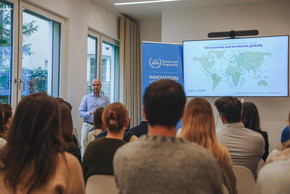
© WFP/Carita Marsili
As global hunger affects more than 319 million people, WU students are taking action. In partnership with the UN World Food Programme (WFP), master’s students from the Strategy, Innovation and Management Control (SIMC) program are driving innovation that directly supports humanitarian operations across the world.
Each year, around 30 master’s students apply their academic expertise to real-world humanitarian challenges, working on strategic recommendations in areas such as innovation, e-learning, and knowledge management. These recommendations were presented to high-ranking WFP representatives, including those from the headquarters in Rome. The initiative has already involved approximately 120 students and continues to combine academic research and global humanitarian practice. Since the summer semester of 2022, WU Vienna’s Institute for Higher Education Management (IHM) has collaborated with the United Nations World Food Programme in an annual course project.
“We’re incredibly proud that our students are repeatedly contributing outstanding work for WFP,” said Dr. Bernhard Böhm and Prof. Barbara Sporn, the lecturers teaching the Business Planning and Performance Management course. “Manifesting this collaboration and taking it to the next level is of key importance to us.”
From Classrooms to Real-World Impact
Over just three years, students have delivered over 70 strategic recommendations. Their projects have helped improve e-learning systems and promote innovative internal practices, contributing to the professional development of more than 23,000 WFP staff members worldwide. The collaboration has also received external recognition. WFP was awarded the 2023/24 Knowledge Management Award for International Organizations, emphasizing the measurable outcomes of the partnership.
“This year’s recommendations were particularly interesting. In addition to discussing tech components of AI, they emphasized the importance of the people side – proposing ideas like an AI Buddy Program to promote meaningful connection and learning.” Brittany Persinger, former Knowledge Management Officer, WFP
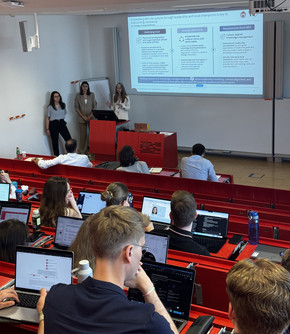
© WFP/Johannes Schade
Empowering Future Changemakers
The partnership doesn’t just strengthen WFP, it also shapes the next generation of humanitarian leaders. Many students have continued their involvement through internships or full-time roles within the organization.
“It has been incredibly rewarding to witness the students’ enthusiasm and dedication in solving this year’s case study. As a WU alumnus, I look forward to more projects that will challenge the students with real-life problems while helping WFP achieve its mandate.” Johannes Schade, WU alumnus, now working at WFP
A Sustainable Collaboration for Global Good
What began as an educational initiative has evolved into a sustained exchange between academia and humanitarian practice. The partnership was initiated by Dr. Bernhard Böhm and Prof. Barbara Sporn (IHM, WU) together with Dr. Dominik Heinrich from WFP. The partnership not only advances WFP’s mission of achieving Zero Hunger but also reinforces WU’s commitment to societal impact and global responsibility.
Key Facts
Duration: since the summer semester of 2022, annual course project cooperation
Participating students: approx. 120 SIMC master's students since 2022 (approx. 30 per year)
Institute for Higher Education Management
WU staff & partners: Dr. Bernhard Böhm, Prof. Barbara Sporn
Cooperation partner: UN World Food Programme (WFP)