![[Translate to English:]](/fileadmin/wu/_processed_/e/3/csm_042-Laptop-960_v1_2dc7c34c80.jpg)
General Information
On this page, you will find the most important information related to our SBWL: our approach, the goals of the SBWL, and how the courses we offer look like.
Watch the video below, in which our professors Wendy Chapple and Christof Miska introduce you to the most important aspects of the SBWL, and students from the very first cohort from 2024/25 share their experience and why they recommend choosing our specialization.
Video introduction
Specialisation Trailer:…
Please note that the course structure presented in this video might slightly change in the upcoming semesters. To find the most up to date list, scroll down on this page to the chapter "What Do the Individual Courses look like?".
SBWL Responsibility and Sustainability in Global Business
Details of the SBWL application for the winter term 2026:
Application opens on August 27, 2026 (2 pm)
Entry criteria: first come first served
We extend our capacities and offer spotsfor 90 students
For more information on the process, click here
Watch the video below in which our professors Wendy Chapple and Christof Miska introduce you to the most important aspects of the SBWL, and students from the very first cohort from 2024/25 share their experience and why they recommend choosing our specialization.
We look forward to working with you this coming semester!
Approach
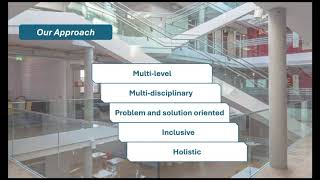
The RSGB specialization adopts multi-level and multi-disciplinary approaches, to enable a holistic assessment of how global systems influence country context, organization decisions, strategies and operations of multinational companies. The specialization is committed to the values of interdisciplinarity and inclusivity, to inspire curiosity and exploration of the role of global business in the development of solutions to meet emerging local, regional, national and global needs.
Goals of the RSGB Specialization
Higher education is crucial to develop a workforce that understands both current and future sustainability challenges. This requires particular pedagogies to equip students with the skillset required. Students need to develop the skills and competencies to understand the complexities of sustainability. In fact, sustainability is often messy, uncertain, and difficult to model, with solutions often leading to unintended consequences, partly due to the high levels of interconnectivity between systems and elements associated with sustainability. However, as part of an educational process, solution-based thinking is key, but to educate on complexities so that solutions are not oversimplified.
Therefore, the RSGB specialization adopts a range of pedagogies, including real-world projects and experiential learning. After successfully finishing the RSGB Specialization, students have acquired a comprehensive understanding of the SDGs and the challenges of acting upon these, in addition to a range of applicable knowledge and skills required for an active and meaningful contribution to addressing the grand challenges of our time.
For all courses, the language of instruction is English.
What do the individual courses look like?
Semester 1: Foundational courses
During the first semester of the program, students enroll in two foundational courses: Responsible Global Business Foundations and the ESG Group Project.
C1: The fundamentals of Responsibility and Sustainability in Global Business (4 ECTS)
This course is a foundation course introducing the core concepts of sustainability and responsibility. Students are exposed to systems-level concepts, complexity and systems thinking. In addition, students study concepts of ethics and responsibility at the organizational and individual level. This provides the foundational theories and tools to navigate and understand complex global challenges facing organizations and managers in the global context.
C2: ESG Group Project - Quantitative / Qualitative Research (4 ECTS)
This course is designed for students to explore current issues in global business and sustainability. It is based upon a range of different experiences, using innovative methodologies such as service-learning approaches, 3-D learning, experiential learning, and mentoring to develop solutions to current challenges facing businesses, NGOs, and SMEs. In addition, as part of this course, students engage with current research conducted within the institute. This involves coverage of various research themes and approaches within the responsibility and sustainability field.
Semester 2: Elective courses 1-3 (4 ECTS each)
During the second semester of the program, students choose three electives from a wide variety of available elective courses.
E1: Sustainability context and systems
Sustainable Development across Societies
Systems of Governance and Sustainability in the International Context
E2: Organizational sustainability landscape
CSR, Sustainability and Global Competitiveness
Sustainability and Innovation
Sustainability Communication: Building narrative agency
E3: Individual Responsibility, ethics and sustainable mindset
Sustainability Capabilities
Responsible Global Leadership
Decision Making for Responsible International Business
Global Mindset Label - 10 ECTS
For your further information:
The RSGB-I SBWL has got the GM Label – Global Mindset Label 10 ECTS
**Global Mindset as a Success Factor - BAWISO23 - Business and Social Sciences**
- In the course catalog, the relevant courses are marked with the pink "GM" label.
- As WISO students, you will earn 4 of the 10 ECTS through the CBK course "Global Business."
The GM Label promotes a global mindset, which is crucial for success in today's business world. Students have the opportunity to enhance their knowledge and skills in the area of global mindset through specific courses.
Any questions?
Please contact us.