ÖAW-Forschungsprojekt: Cross-Border Income Shifting
Finanziert durch das Förderprogramm DATA:RESEARCH:AUSTRIA der Österreichischen Akademie der Wissenschaften (ÖAW)
Project Title:
Cross-border Income Shifting of Multinational Corporations: Measurement, Countermeasures, and Real-Economic Effects
Project Overview and Key Findings:
This research project investigates cross-border income shifting by multinational enterprises (MNEs). It examines the extent of income shifting, evaluates whether and to what extent anti-base erosion and profit shifting (BEPS) policies curb these practices, and analyzes how international tax incentives influence real economic activity and investment. Drawing on pseudonymized Austrian corporate tax return data accessed through the Austrian Micro Data Center (AMDC), the project provides new evidence on both the scale of income shifting and the effects of recent tax reforms.
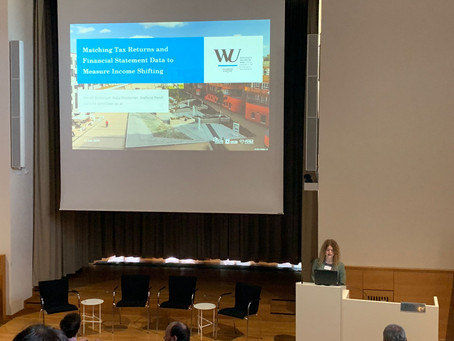
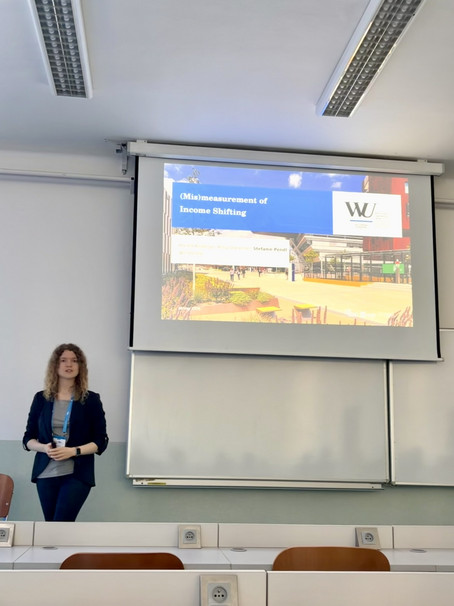
The findings show that Austrian MNE entities respond to international tax-rate differences by shifting a portion of their taxable income abroad. On average, approximately 2% of taxable income is shifted out of Austria, with larger responses among firms with links to tax havens. While income shifting remains relevant, its magnitude appears smaller than suggested by international studies. At the same time, the project demonstrates that commonly used data sources, such as public financial statements, underestimate the extent of income shifting by roughly 50%, highlighting the importance of high-quality administrative data for tax research and policy evaluation.
A second strand of the project evaluates the effectiveness of anti-BEPS policies implemented in Austria. The evidence shows that targeted rules that restrict specific income-shifting channels, such as limitations on interest and royalty deductions, significantly reduce income shifting and increase taxable income reported in Austria. In contrast, measures that primarily rely on tax transparency (Country-by-Country-Reporting) or contain broad substance-based or active-income exemptions appear less effective. Rather than reducing income shifting, such rules can encourage firms to restructure their operations and expand economic activity in low-tax jurisdictions, potentially creating new distortions and weakening the intended effects of the policy.
The project also investigates the real economic consequences of tax incentives. The evidence suggests that income shifting and investment decisions are closely linked. Firms that shift profits out of Austria tend to invest more in Austria, consistent with the idea that income shifting lowers the effective cost of capital for investment in high-tax jurisdictions. At the same time, reductions in foreign corporate tax rates not only strengthen incentives to shift income abroad but also incentivize MNE entities to reduce their investment in Austria. These findings indicate that international tax changes affect both the location of reported profits and the allocation of real economic activity across jurisdictions.
Taken together, the project contributes to a better understanding of how MNE entities respond to international tax incentives and provides evidence that can inform the design of future tax policies. More broadly, it demonstrates the strategic value of administrative corporate tax data for evaluating the economic effects of international tax policy.
The project investigates cross-border income shifting by multinational firms, the effectiveness of legislative counter measures, and potential real-economic effects. Despite the societal implications of cross-border income shifting and the far-reaching reform agenda of the OECD, we still lack consensus about the extent to which multinational firms shift income across borders and the associated loss in tax revenue. Aside from the magnitude of income shifted, the suitability of widely used data sources for identifying and measuring income shifting, the effectiveness of legislative countermeasures, and the associated real-economic effects are not well understood. Gaining greater insights along these dimensions is crucial for effective policy-making and informative for future research.
Scientific Output and Public Outreach:
Paper 1 – (Mis)measurement of Income Shifting:
https://doi.org/10.57938/653e89db-0b99-45dd-88ce-1b5e3fa932ab
Paper 2 – Multinationals’ Responses to Anti-Base Erosion and Profit Shifting Policies: Evidence from Tax Returns
https://doi.org/10.57938/aea9cbba-5ddd-40cf-8cc7-7d6fe381aef6
Paper 3 – Real Effects of Income Shifting
doi.org/10.57938/807e582b-1620-4de6-a05f-d878ec803821
WU Vienna Press Release (in German):
Daten aus Österreich zeigen, was gegen Steuervermeidung wirkt
Video from Public Event on Global Minimum Taxation – WU Matters. WU Talks (in German):
Globale Mindeststeuer vs. Steueroasen | WU matters. WU talks.